
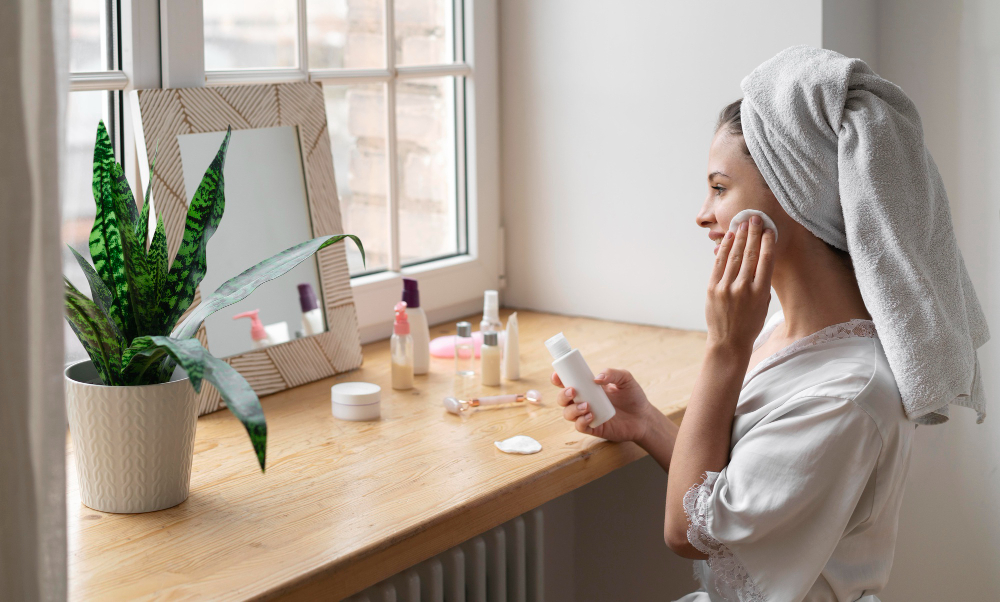
The Rise of Skinimalism: Your 5-Step Minimal Skincare Routine That Actually Works
For years, the beauty industry championed the “more is more” philosophy. Multi-step regimens—often popularized by K-beauty trends—encouraged consumers to layer up to ten or twelve different products every single morning and night. From double-cleansing and clarifying toners to essences, ampoules, target serums, sheet masks, eye creams, and overnight sleeping packs, the vanity table became a crowded chemistry lab.
However, a major cultural and dermatological shift is underway. Enter skinimalism, a movement that advocates for a simplified, intentional, and highly effective approach to beauty. Rather than forcing the skin to tolerate an overwhelming cocktail of active ingredients, skinimalism emphasizes supporting the skin’s natural biological functions with fewer, higher-quality products.
This shift is more than just a passing trend; it is a response to widespread skin sensitization caused by product overload. By paring down your daily routine to the absolute essentials, you can experience profound psychological, financial, and physiological benefits. Financially, you save hundreds of dollars a year on redundant formulas. Psychologically, you reclaim precious time in your morning and evening routines, transforming what used to be a tedious chore into a mindful, stress-free ritual. Most importantly, stepping away from over-complicated routines prevents the breakdown of your skin’s delicate lipid barrier, paving the way for a naturally healthy, glowing complexion.
In this comprehensive guide, we will break down the science of why your skin prefers simplicity and provide an actionable, dermatologist-aligned 5-step minimal skincare routine designed to deliver optimal results with minimal effort.
The Science of Less: Why Your Skin Barrier Prefers Simplicity
To understand why skinimalism is so effective, we must look at the anatomy of the skin’s outermost layer. The stratum corneum, often referred to as the skin barrier, acts as your body’s primary shield against external aggressors. Frequently compared to a “bricks and mortar” structure, this barrier is composed of cellular “bricks” (corneocytes) bound together by a lipid “mortar” consisting of ceramides, cholesterol, and free fatty acids. Above this layer lies the acid mantle, a fine, slightly acidic film made of sebum and sweat that keeps harmful bacteria at bay.
When you flood your face with too many products, you risk disrupting this delicate equilibrium. Product overloading frequently leads to:
- Contact Dermatitis: Redness, itching, and dry patches triggered by exposure to excessive preservatives, synthetic fragrances, or active ingredients.
- Chronic Inflammation: When the barrier is constantly assaulted, it triggers a low-grade inflammatory response that accelerates premature aging and degrades collagen.
- Rebound Breakouts: Stripping the skin of its natural oils causes the sebaceous glands to overcompensate, producing excess sebum that clogs pores.
Furthermore, layering too many active ingredients can deactivate the very products you are paying premium prices for. For example, using a highly acidic chemical exfoliant alongside a formula containing copper peptides can denature the peptides, rendering them useless. Similarly, mixing retinol with benzoyl peroxide can cause both molecules to oxidize and lose their efficacy.
From a clinical perspective, skin recovery thrives on simplicity. When dermatologists treat patients with compromised, reactive skin, their first prescription is almost always a “skincare fast”—stripping the daily regimen down to nothing but a bland cleanser, a basic moisturizer, and sunscreen. By adopting a streamlined, science-backed routine, you allow your skin’s natural regenerative processes to take center stage.
Step 1: The Gentle Cleanser (Purify Without Stripping)
The foundation of any healthy skincare routine is cleansing, but the goal should never be to achieve a “squeaky-clean” feeling. That tight, squeaky sensation is actually a warning sign that you have stripped away your skin’s natural moisturizing factors (NMF) and lipids. To protect your barrier, you should opt for a non-foaming or low-foaming cleanser.
The role of pH balance is crucial when selecting a face wash. Healthy human skin maintains an acidic pH of around 4.7 to 5.5. Traditional bar soaps and harsh foaming cleansers are often highly alkaline, with pH levels ranging from 8 to 10. Washing with these products disrupts the acid mantle, taking up to several hours for the skin to return to its natural acidic state. During this recovery window, the skin is highly susceptible to dehydration and bacterial invasion.
Choosing Your Cleanser by Skin Type
- Dry or Sensitive Skin: Look for milky, cream, or lotion-based cleansers infused with hydrating ingredients like glycerin or colloidal oatmeal. These formulas cleanse water-soluble debris without stripping the natural lipid barrier.
- Oily or Acne-Prone Skin: Choose a gentle, low-foaming gel cleanser. Opt for formulations containing non-stripping surfactants (like coco-glucoside) to cleanse excess oil without triggering a dry, rebound sebum response.
- Combination Skin: A lightweight gel-cream cleanser offers the perfect balance, purifying the oily T-zone while preserving moisture in the drier cheek areas.
Best Practices for Cleansing
To prevent mechanical irritation, always wash your face using lukewarm water—hot water strips away natural lipids, while cold water prevents pores from relaxing sufficiently to release debris. Apply your cleanser using your clean fingertips, massaging in gentle, upward circular motions for 30 to 60 seconds. Avoid abrasive washcloths, silicone scrubbing brushes, or loofahs, which can create micro-tears in the stratum corneum and invite irritation.
Step 2: The Targeted Treatment (Address Your Specific Concerns)
The second step of your minimal routine is where you address your primary skin goals. Instead of layering three or four different serums to tackle brightness, fine lines, congestion, and hydration all at once, skinimalism challenges you to select one high-quality active ingredient that addresses your primary concern.
By focusing on a single, targeted treatment, you drastically reduce the risk of sensitizing your skin and ensure that the active ingredient can perform at its maximum clinical efficacy. Here are the powerhouse ingredients to consider:
| Skin Concern | Powerhouse Active Ingredient | How It Works |
| :— | :— | :— |
| Dullness & Sun Damage | Vitamin C (L-Ascorbic Acid or derivatives) | A potent antioxidant that neutralizes free radicals, boosts collagen synthesis, and inhibits melanin production to fade dark spots. |
| Aging & Fine Lines | Retinoids (Retinol, Retinal, or Adapalene) | Accelerates cellular turnover, stimulates collagen production, and refines overall skin texture and tone. |
| Congestion & Large Pores | Niacinamide (Vitamin B3) | Regulates sebum production, strengthens the skin barrier, reduces redness, and minimizes the appearance of pores. |
| Dehydration & Fine Lines | Hyaluronic Acid or Beta-Glucan | Acts as a moisture magnet, drawing water into the epidermis to plump and deeply hydrate the skin. |
How to Introduce Actives Safely
To avoid sensitizing your skin, never introduce multiple new active ingredients at the same time. Start by applying your chosen treatment twice a week, gradually increasing the frequency as your skin builds tolerance. If you are using potent actives like retinoids, consider the “sandwich method”—applying a thin layer of moisturizer first, followed by your retinoid, and finishing with another layer of moisturizer to buffer potential irritation.
Timing Matters: AM vs. PM
For optimal results, align your active ingredients with your body’s natural circadian rhythm:
- Daytime (AM): Focus on antioxidants like Vitamin C. These protect your skin from environmental stressors, pollution, and UV-induced free radicals encountered throughout the day.
- Nighttime (PM): Focus on repair and cell regeneration using retinoids. Because retinoids are photounstable (meaning they break down and lose efficacy in sunlight) and increase sun sensitivity, they should be reserved exclusively for your evening routine.
Step 3: The Nourishing Moisturizer (Lock in Hydration)
A high-performance moisturizer is non-negotiable for every skin type, acting as a protective secondary barrier that seals in hydration and prevents transepidermal water loss (TEWL). To find a moisturizer that truly reinforces your natural lipid barrier, look for a formula that combines three essential classes of moisturizing agents:
- Humectants: Ingredients like glycerin, hyaluronic acid, and urea that draw water from the deeper layers of the skin (the dermis) and the surrounding atmosphere into the outer stratum corneum.
- Emollients: Ingredients like ceramides, squalane, and fatty acids that fill in the microscopic gaps between skin cells, smoothing the skin surface and restoring the lipid matrix.
- Occlusives: Ingredients like petrolatum, shea butter, and dimethicone that form a physical, breathable barrier on top of the skin, locking in moisture and preventing evaporation.
Seasonal Adjustments and Skin Types
The texture of your moisturizer should adapt to both your skin type and your local climate:
- In Warm, Humid Weather (or for Oily Skin): Opt for lightweight, water-based gel-creams. These supply plenty of humectants to hydrate the skin without adding heavy oils that can clog pores or feel greasy. Interestingly, proper hydration actually *prevents* the overproduction of sebum; when oily skin is dehydrated, it triggers a panic response, pumping out excess oil to compensate for the lack of water.
- In Cold, Dry Weather (or for Dry Skin): Transition to rich, lipid-heavy creams. These formulas contain higher concentrations of emollients and occlusives to shield your skin from harsh, biting winds and indoor heating, which quickly strip away moisture.
Step 4: The Essential Sunscreen (Protect and Prevent)
If you only use one skincare product for the rest of your life, let it be sunscreen. Broad-spectrum SPF 30 or higher is the ultimate anti-aging product and the non-negotiable anchor of any skincare routine. Approximately 80% to 90% of visible skin aging—including fine lines, deep wrinkles, loss of elasticity, and hyperpigmentation—is caused by cumulative exposure to ultraviolet (UV) radiation from the sun.
To choose the best protection for your skin, it helps to understand the two main categories of UV filters:
- Mineral (Physical) Filters: Formulated with Zinc Oxide or Titanium Dioxide. These ingredients sit on top of the skin’s surface, acting like tiny mirrors that physically reflect and scatter UV rays. Mineral sunscreens are highly recommended for sensitive, reactive, or acne-prone skin, as they are naturally soothing and less likely to cause irritation or chemical heat reactions.
- Chemical Filters: Formulated with active organic compounds like Avobenzone, Homosalate, Octisalate, and Octocrylene. These filters absorb UV rays, convert them into negligible heat, and release them from the skin. Chemical sunscreens are praised for their sheer, lightweight, and invisible finishes, making them highly cosmetically elegant on darker skin tones and under makeup.
Year-Round Compliance
A common skincare pitfall is only applying sunscreen on bright, sunny summer days. UV rays (specifically UVA rays, which penetrate deeply into the skin to degrade collagen and elastin) can pass through heavy cloud cover, rain, fog, and even glass windows. Therefore, daily, year-round sunscreen compliance is vital. To make this step effortless, look for modern, cosmetically elegant formulations. Many sunscreens now double as lightweight moisturizers, eliminating the need for a separate morning moisturizing step.
Step 5: The Weekly Reset (Exfoliation or Nourishing Mask)
While daily routines should remain highly consistent, your skin benefit greatly from a weekly “reset.” This step addresses dead skin cell accumulation and environmental build-up without subjecting your face to aggressive daily scrubbing, which can severely compromise the lipid barrier.
Exfoliation: Chemical vs. Physical
Rather than using harsh physical scrubs containing walnut shells or apricot seeds—which cause micro-tears and premature aging—opt for chemical exfoliants. These skin-friendly acids gently dissolve the microscopic “glue” holding dead skin cells together, allowing them to slough off naturally:
- Alpha Hydroxy Acids (AHAs): Ingredients like glycolic and lactic acid are water-soluble. They work primarily on the skin’s surface, making them excellent for fading hyperpigmentation, improving dry patches, and boosting radiance.
- Beta Hydroxy Acids (BHAs): Salicylic acid is oil-soluble, meaning it can penetrate deep into pores to dissolve sebum and debris, making it the gold standard for blackheads, whiteheads, and acne-prone skin.
- Polyhydroxy Acids (PHAs): Gluconolactone and lactobionic acid have larger molecular structures, meaning they penetrate the skin slowly and gently. These are ideal for highly sensitive skin or those with rosacea.
The Soothing Alternative: Nourishing Masks
If your skin is feeling dry, tight, or sensitized, swap your weekly exfoliant for a hydrating, barrier-repair mask. Look for wash-off or overnight formulas packed with soothing botanical extracts (like centella asiatica, green tea, or calendula), ceramides, and panthenol to quiet inflammation and deeply nourish stressed skin.
Signs of Over-Exfoliation
It is vital to monitor your skin for signs of over-exfoliation. If your face begins to look excessively shiny (without actual oiliness), feels tight, burns when applying simple moisturizers, or develops unexplained dry patches, your barrier is compromised. If this occurs, immediately scale back your routine, pause all active treatments and exfoliants, and stick to the core triad of a gentle cleanser, basic moisturizer, and sunscreen until your skin barrier fully heals.
Frequently Asked Questions About Skinimalism
Can a minimal routine really address stubborn concerns like acne or hyperpigmentation?
Yes, absolutely. In fact, complex routines often worsen stubborn acne and hyperpigmentation because layering too many active ingredients causes inflammation, which triggers post-inflammatory hyperpigmentation (PIH) and acne flare-ups. By focusing on one targeted clinical active (such as salicylic acid for acne or Vitamin C/retinoids for hyperpigmentation) and keeping the rest of your routine ultra-gentle, your skin can utilize the active ingredient much more effectively without becoming inflamed or irritated.
How long does it take to see visible results when transitioning to a 5-step routine?
Your skin naturally undergoes a cellular turnover cycle roughly every 28 to 40 days, depending on your age. When you transition to a simplified 5-step routine, you will likely notice immediate relief from sensitivity, dryness, and redness within the first two weeks as your barrier begins to repair itself. For deeper concerns like fine lines, acne clearance, or fading dark spots, expect to see significant, visible improvements after about 6 to 12 weeks of consistent, daily compliance.
Is skinimalism suitable for mature skin types requiring advanced anti-aging benefits?
Yes. Mature skin naturally produces fewer lipids and experiences a thinner stratum corneum, making it much more vulnerable to dryness and irritation. Flooding mature skin with heavy, multi-step anti-aging routines can trigger chronic inflammation, which accelerates the breakdown of collagen and elastin (a process known as “inflammaging”). A minimal routine centered around a gentle, non-stripping cleanser, a rich ceramide-based moisturizer, a prescription or high-quality OTC retinoid, and daily SPF is the most effective way to stimulate collagen production and maintain skin density safely.
Can I still double-cleanse in the evening if I am following a skinimalist philosophy?
Yes, double-cleansing can fit perfectly within a skinimalist routine, especially if you wear waterproof makeup, heavy silicone-based sunscreens, or live in a highly polluted urban environment. The key is to do it gently. Your first step should be an emulsifying oil or balm cleanser, which dissolves makeup and SPF without stripping your skin. Follow this with your standard gentle, non-foaming water-based cleanser to sweep away any remaining residue.
How do I transition from a 10-step routine to a 5-step routine without experiencing a purge?
“Purging” typically only occurs when you introduce ingredients that accelerate cellular turnover, such as retinoids, AHAs, or BHAs. When transitioning to a minimal routine, you are actually removing products, so your skin should not experience a purge. To transition safely without shocking your skin, start by finishing up your redundant serums and toners and simply choosing not to repurchase them. Keep your core cleanser, moisturizer, and SPF, and select just one active treatment serum to use consistently. Your skin will appreciate the gradual relief from ingredient overload!


