
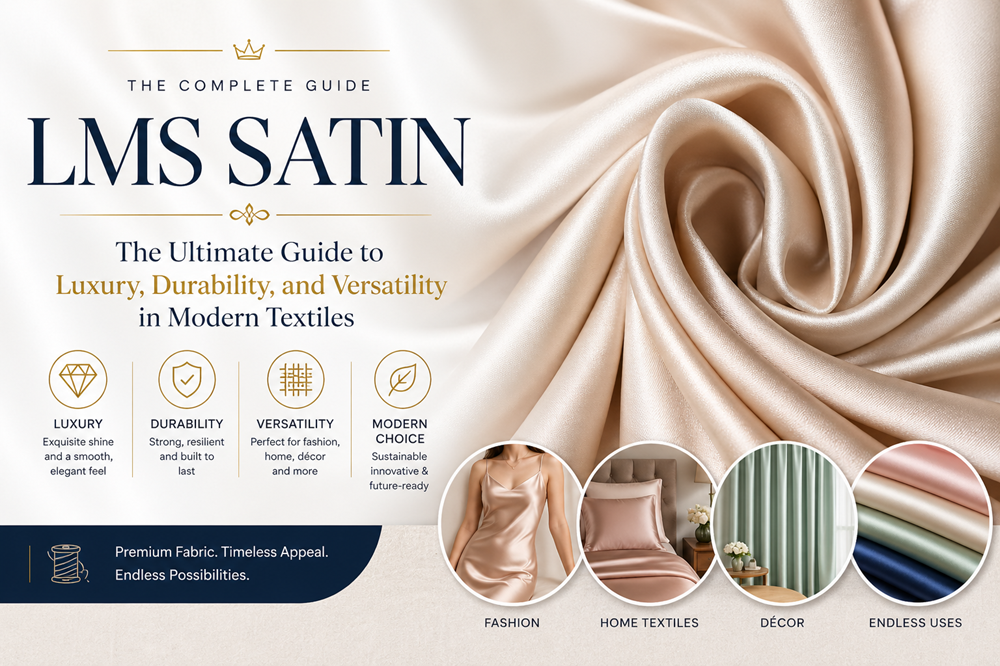
LMS Satin: The Ultimate Guide to Luxury, Durability, and Versatility in Modern Textiles
Introduction to LMS Satin
In the ever-evolving world of premium fabrics, LMS Satin (Luxury Modern Standard Satin) has emerged as a revolutionary material, redefining what it means to combine opulence with high-performance engineering. Originally confined to delicate and fragile applications, modern textile innovation has transformed satin into a robust, multi-disciplinary fabric. Today, LMS Satin stands at the forefront of the luxury textile market, celebrated for its flawless finish, structural integrity, and remarkable versatility.
The story of this luxurious fabric begins centuries ago. The historical evolution of satin weaves traces back to medieval China. The term *satin* itself is derived from the Arabic name for the Chinese port city of Zaitun (now Quanzhou), where these lustrous fabrics were first traded along the Silk Road. For centuries, satin was exclusively woven from pure silk, making it a highly expensive commodity reserved for royalty and the extreme elite. However, the transition from artisanal silk weaving to modern industrial standards gave birth to LMS Satin, a contemporary tier of fabric designed to honor the heritage of traditional weaving while meeting the rigorous demands of modern use.
What truly distinguishes LMS Satin from standard, off-the-shelf satin grades are its unique selling propositions. Standard satin can often be overly fragile, prone to static, and difficult to maintain. LMS Satin, however, is manufactured using a tightly controlled, high-density weave that mitigates these flaws. It offers an exceptional strength-to-weight ratio, remarkable color retention, and a dimensional stability rarely seen in highly reflective textiles.
Because of these inherent strengths, LMS Satin has become a preferred choice for designers and architects alike. Whether it is a fashion house constructing a sculptural evening gown or an interior architect designing a high-traffic boutique hotel, LMS Satin provides the aesthetic grandeur of traditional silk satin without the crippling fragility.
The Technical Composition and Weaving Process
The secret behind the unmistakable sheen of LMS Satin lies in its sophisticated structural composition. Understanding the signature ‘float’ technique is crucial to appreciating the fabric’s luxury. Unlike a basic plain weave where threads interlace in a simple one-over, one-under checkerboard pattern, the satin weave allows multiple warp (vertical) threads to “float” over a single weft (horizontal) thread—often in a 4/1, 5/1, or 7/1 ratio. In LMS satin construction, these continuous floats are tightly engineered to create a smooth, uninterrupted surface that catches and reflects light brilliantly.
The role of filament fibers is another foundational element. True satin is defined by its use of long, continuous filaments rather than short, spun fibers. LMS Satin achieves its superior grade by utilizing premium filament fibers, typically incorporating pure silk, high-tenacity polyester, and acetate blends. While silk provides the ultimate organic softness and breathability, the strategic inclusion of high-grade polyester and acetate introduces elasticity, wrinkle-resistance, and unparalleled tensile strength.
When analyzing thread counts, consumers often equate higher numbers with better quality. In the realm of LMS Satin, however, thread count directly impacts the fabric weight and its ‘hand’—a textile term referring to how the fabric feels and drapes. A lightweight LMS Satin with a finer thread count offers a liquid-like drape ideal for lingerie and delicate garments. Conversely, a heavy-weight, high-thread-count LMS Satin possesses a structured, architectural hand, perfect for robust upholstery and sculpted fashion pieces.
Core Characteristics and Performance Benefits
LMS Satin is not merely visually striking; it is highly functional. One of its most celebrated attributes is its superior light reflection, which creates a distinct ‘pearlescent’ effect on the surface. Because the long float threads face a single direction, they reflect light uniformly, giving the fabric an almost liquid, glowing appearance that changes depending on the viewing angle.
In terms of practicality, the enhanced durability metrics of LMS Satin are a game-changer. Historically, satin’s long floats made it incredibly susceptible to catching on sharp objects. However, the tightly woven filament blends used in modern LMS Satin provide a high resistance to snagging and pilling. This means the fabric retains its flawless, smooth face even after prolonged use or frequent contact with other materials.
Furthermore, advancements in textile engineering have significantly improved the breathability and moisture-wicking properties of modern LMS variants. By blending natural silks with advanced synthetic microfibers, manufacturers have created a satin that feels cool to the touch and regulates body temperature, making it incredibly comfortable for both apparel and bedding.
Beyond the visual and tactile, LMS Satin offers surprising acoustic properties. Heavy-grade LMS satin is increasingly utilized in architectural settings to assist in sound dampening. The dense, multi-layered structure of the heavy satin absorbs high-frequency sound waves, reducing echo and ambient noise in large, open spaces, making it an unexpected but highly effective tool in modern acoustic design.
LMS Satin in Interior Design and Architecture
In the world of luxury interiors, fabrics must perform as beautifully as they look. LMS Satin has made significant inroads into luxury upholstery, effectively transforming everyday furniture into magnificent statement pieces. A sofa or accent chair upholstered in a heavyweight LMS Satin instantly elevates a room, offering a tactile richness and visual depth that flat-woven fabrics simply cannot replicate.
When it comes to window treatments, LMS Satin is a leading choice for both functional and decorative purposes. Designers frequently use LMS satin for blackout lining and decorative drapes. The dense weave naturally blocks out harsh sunlight while providing an elegant, flowing silhouette that puddles beautifully on the floor.
The application of LMS Satin extends even to the walls. There is a growing trend of utilizing fabric-wrapped panels in high-end hospitality and residential design. Upholstering walls with LMS Satin not only introduces texture and warmth into a room but also significantly improves the room’s acoustic profile, creating an atmosphere of hushed exclusivity.
Fashion and Haute Couture Applications
LMS Satin remains a cornerstone in the high-fashion industry. Its legendary draping qualities explain why LMS satin is the foundation of modern evening gowns, bridal wear, and elaborate haute couture creations. The fabric possesses an innate ability to mold to the human body while simultaneously maintaining its own sculptural integrity, allowing designers to create dramatic pleats, folds, and voluminous skirts that hold their shape.
Beyond the visible exterior, lining luxury garments is another critical application. High-end blazers, tailored coats, and bespoke suits are frequently lined with LMS Satin. This intersection of comfort and aesthetics ensures that garments slip on and off effortlessly while providing a hidden flash of luxury for the wearer.
The fabric is also a staple in high-end accessories. From intricately pleated bridal clutches and evening bags to bespoke footwear like ballet flats and designer pumps, LMS Satin provides a pristine, elegant finish that elevates any accessory to luxury status.
Interestingly, there has been a significant resurgence of satin in menswear. Once reserved for vintage formalwear, LMS Satin is now widely used in contemporary men’s fashion. It features prominently in tailored waistcoats, striking tuxedo lapels, and sleek formal shirts, offering modern men a sophisticated way to incorporate texture and sheen into their everyday wardrobes.
Comparing LMS Satin with Alternative Fabrics
When navigating the textile market, it is essential to understand how LMS Satin compares to similar fabrics.
LMS Satin vs. Sateen
While they sound similar, LMS Satin and sateen are fundamentally different. The primary difference lies in the fiber and weave direction. LMS Satin is crafted using continuous filament fibers (like silk or polyester) and is characterized by a warp-faced float. In contrast, sateen is made using short-staple spun yarns—usually cotton—and utilizes a weft-faced float. Sateen is durable and soft but lacks the brilliant, liquid luster and flowing drape of LMS Satin.
Satin vs. Silk
A common consumer confusion is the difference between satin and silk. Simply put, silk is a raw fiber, whereas satin is a type of weave. A cost-benefit analysis for the general consumer reveals that while 100% pure silk satin is the ultimate luxury, it is extremely expensive and requires meticulous care. LMS Satin offers a brilliant compromise, blending silk with high-grade synthetics to deliver the look and feel of pure silk satin at a more accessible price point, accompanied by significantly enhanced durability.
Performance vs. Velvet and Brocade
For high-traffic environments, how does LMS Satin stack up against velvet and brocade? While velvet offers a plush texture and brocade offers intricate woven patterns, both can be notoriously difficult to clean and are highly susceptible to crushing and fraying. High-density LMS Satin provides a smoother, more resilient surface that repels dust and is easier to maintain, making it a superior choice for modern, high-traffic commercial spaces.
Identifying ‘Fakes’
With popularity comes imitation. It is crucial to know how to spot low-grade synthetic imitations. Fake or cheap satin often feels excessively plasticky, generates intense static electricity, and lacks a breathable drape. High-quality LMS Satin, on the other hand, should feel cool to the touch, possess a substantial weight, and exhibit a subtle, multidimensional sheen rather than a cheap, flat gloss.
Maintenance, Care, and Longevity
The secret to preserving the breathtaking finish of LMS Satin lies in proper maintenance and care.
- Professional Cleaning vs. Home Care: The composition blend of your LMS Satin is the deciding factor. Pure silk LMS blends generally require professional dry cleaning to prevent shrinking and loss of luster. However, modern synthetic LMS blends can often be hand-washed at home using cold water and a mild, pH-neutral detergent. Always avoid harsh wringing, as this can easily distort the weave.
- De-wrinkling Techniques: Safe steaming is highly recommended over pressing. If you must use an iron, use the lowest possible temperature setting, turn the fabric inside out, and *always* place a protective pressing cloth between the iron and the satin. Applying direct heat to the shiny face of the fabric can melt synthetic fibers or cause permanent scorching.
- Storage Solutions: This is critical for preventing permanent creasing and fiber degradation. LMS Satin garments should be hung on padded hangers in a cool, dry environment away from direct sunlight, which can cause the dyes to fade. For long-term storage, avoid plastic garment bags that trap moisture; instead, opt for breathable cotton bags.
Sustainability and Future Innovations
The modern textile industry is undergoing a massive transformation, and the production of LMS Satin is evolving to meet eco-conscious demands.
One of the most significant shifts is the integration of recycled polyester (rPET) in LMS satin production. By utilizing high-quality fibers spun from recycled ocean plastics and discarded consumer goods, manufacturers are drastically reducing the carbon footprint of LMS Satin without compromising its signature luxury and durability.
Furthermore, there is a growing emphasis on the ethical sourcing of raw materials and fair labor practices in textile mills. Transparent supply chains are becoming the norm, ensuring that the silk harvested for LMS blends is cruelty-free and that the artisans weaving the fabrics are compensated fairly in safe working environments.
Technological advancements are also pushing the boundaries of what LMS Satin can achieve. Digital printing on satin has reached unprecedented levels of detail, allowing designers to apply photorealistic patterns directly onto the fabric without altering its soft hand or reflective properties. Additionally, the nascent field of smart-fabric integrations is exploring ways to weave conductive micro-threads into LMS Satin, paving the way for luxury garments that can regulate temperature or safely interact with digital devices.
Conclusion
From its ancient origins in the port of Zaitun to its current status as a pillar of modern luxury, the evolution of the satin weave is a testament to human ingenuity and our enduring love for beauty. LMS Satin represents the perfect synthesis of this rich history and forward-thinking technology. By offering an unmatched blend of pearlescent aesthetics, robust durability, and incredible versatility, LMS Satin continues to inspire awe. Its enduring legacy and promising future outlook ensure that it will remain a foundational material in global design, fashion, and architecture for generations to come.


